
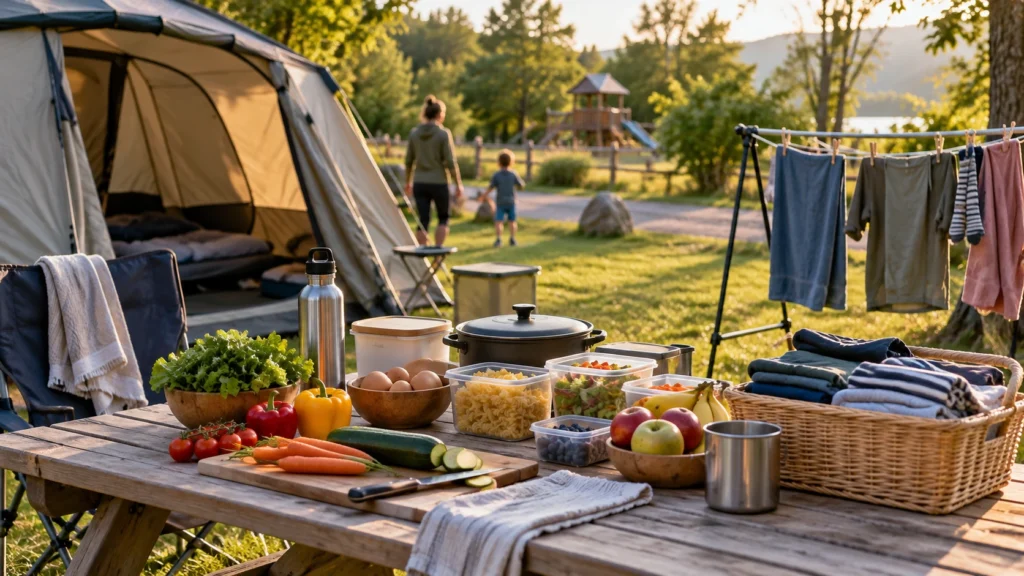
Family camping preparation gets easier when meals, laundry and playtime are planned together. A late lunch can leave everyone hungry just as you need to set up camp; a pile of wet clothes can take over the space meant for sleeping. A simple routine gives the day enough shape to handle those moments while leaving room for the things you came to enjoy.
Plan meals around the day you expect to have
Start with the first evening. After travel and check-in, a complicated recipe may be the last thing anyone wants to manage. Pack a meal that needs little preparation, along with snacks and drinks that are easy to reach before the rest of the gear is unpacked. If you expect to arrive late, check when you can access cooking facilities and where you can get food nearby.
For the remaining days, choose a few flexible meals rather than assigning every dish to a fixed time. Pasta, sandwiches and simple breakfast foods can work around a trip to the beach or a longer outing. Keep one meal option that can be made quickly if plans change. If you intend to use a guest kitchen, check what equipment is available before deciding what to bring; access to an oven does not tell you whether cookware is supplied.
A short meal plan helps with shopping, too. Group ingredients that can serve more than one purpose, then separate what must stay cool from shelf-stable food. Keep food packed securely and follow any campsite guidance on storage and waste. That makes cooking less of a search through bags and helps keep the pitch tidy.
At Hamre Familiecamping, guests can use a guest kitchen with ovens, and there is a restaurant on site. A grocery store is also across the road. Those options offer some flexibility, but it is still useful to decide which meals you want to cook and which you would rather buy.
Pack clothes with laundry in mind
The right amount of clothing depends on the weather, the length of the stay and how often your family is willing to wash. Children may need a change after a sandy afternoon or a spilled meal, yet packing for every possible mishap can crowd the car and the sleeping area. Start with outfits for the expected activities, then add a modest spare set for each child.
Separate clean clothes, worn clothes and damp items from the beginning. A washable bag for dirty laundry and another container for wet swimwear or towels make it easier to see what needs attention. Avoid leaving damp clothing sealed away for the whole trip; hang it to dry when you have a suitable place to do so.
Hamre Familiecamping has washing machines and tumble dryers available to guests. On a longer stay, a laundry session partway through the trip can reduce how much you pack. Check how the facilities are accessed when you arrive, and bring any washing supplies you expect to need rather than assuming they are provided.
For example, if the children are likely to spend several afternoons at the beach, packing two sets of swimwear may be more useful than packing extra everyday outfits. One set can dry while the other is in use. If the weather turns cool or wet, that plan may change, so keep a dry layer easy to find.
Give playtime a loose rhythm
Playtime is often the easiest part of a camping holiday to imagine and the hardest to fit around meals, washing and tired children. Pick one main activity for the day, then leave space for shorter play periods close to camp. This avoids treating every available attraction as something the family must do.
At Hamre Familiecamping, families have access to playground activities, including a jumping pillow and an interactive playground. The beach is nearby, and the campsite also lists walking routes and paddling among its activities. Choose what suits the children’s ages, the conditions and the time available. Check any activity details locally before relying on them for a particular day.
A small play bag can bridge the gaps between bigger plans. A ball, colouring materials or a familiar card game can help while someone prepares food or waits for laundry. Keep items that need close supervision for times when an adult can give them full attention, especially around water and shared spaces.
Imagine returning from an outing with hungry children and a load of sandy clothes. Starting an elaborate dinner immediately may be frustrating for everyone. A quick planned meal, followed by nearby play while an adult sorts the washing, gives each task a manageable place in the evening. The point is not to schedule every minute; it is to prevent several needs from becoming urgent at once.
For more detailed information on this topic, read our guide on Playground Access or Cabin Accommodation for Active Families?
Make arrival and daily resets simple
Before departure, put booking details, bedding, the first meal and weather-appropriate layers where you can reach them. Confirm check-in arrangements, particularly if you may arrive outside reception hours. Hamre Familiecamping has a self-check-in machine for camping arrivals outside reception opening times, but it is sensible to read the current arrival instructions before setting off.
Once settled, a brief reset each evening can save time the next morning: clear the cooking area, put dirty clothes in their bag, and check what food is needed for the following day. Ask the children to help with jobs they can manage, such as gathering toys or setting out breakfast items. Shared facilities are easier for everyone to use when belongings are kept together and cleaned up promptly.
Family camping preparation works best as a practical framework, not a strict timetable. Plan food for the moments when convenience matters, use laundry to keep packing reasonable, and balance outings with unhurried play. With those basics organised, changes in weather or energy levels are easier to handle.