
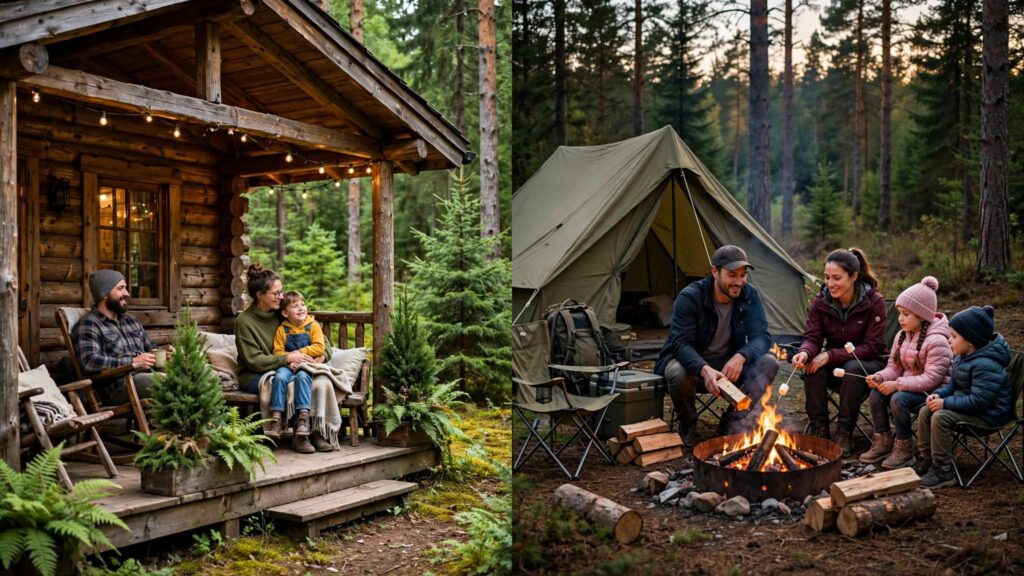
Planning a family camping trip often begins with one important decision: where will everyone sleep? For many families, the choice comes down to cabin camping vs tent camping. Both options offer time outdoors, a break from everyday routines, and opportunities to explore nature, but the actual experience can be quite different.
Tent camping provides a traditional outdoor experience where families sleep close to nature and bring most of their own equipment. Cabin camping adds more shelter and everyday convenience while still allowing families to enjoy a campground setting. Choosing between them depends on your children’s ages, comfort preferences, budget, weather expectations, and how much camping equipment you already own.
What Is the Difference Between Cabin Camping and Tent Camping?
Tent camping generally means staying at a designated campsite in a tent that you bring and set up yourself. Depending on the campground, facilities such as toilets, showers, drinking water, picnic tables, and fire areas may be available nearby.
Cabin camping involves staying in a permanent structure at or near a campground. Cabins vary considerably. A simple camping cabin might contain little more than beds, lighting, and basic furniture, while other cabins may include a bathroom, kitchen facilities, heating, or additional living space.
Before booking either option, families should check exactly what the campsite provides. Reading about the Top Benefits of Staying at a Family-Friendly Campsite can also help when deciding which facilities and surroundings are likely to make a family trip more comfortable.
Cabin Camping: Comfort Without Leaving the Outdoors Behind
For families that enjoy outdoor activities but prefer a more protected place to sleep, a cabin can provide a useful middle ground.
Easier Sleeping Arrangements
One of the main differences in the cabin camping vs tent camping decision is sleeping comfort. Cabins usually provide proper beds or sleeping platforms, although guests may still need to bring bedding at some locations.
This can be particularly convenient for families with younger children or anyone who finds sleeping on a camping mat uncomfortable. Parents also avoid having to organize sleeping bags and mattresses inside a limited tent space.
Better Protection From Changing Weather
Rain and wind can quickly change the experience of tent camping. A cabin provides solid walls and a roof, giving the family a dry place to return to after outdoor activities.
That does not mean weather can be ignored entirely. Families should still pack appropriate clothing and check whether a cabin has heating, cooling, or ventilation before their stay.
Less Equipment to Organize
Cabin camping can reduce the amount of camping gear required. You may not need a family tent, groundsheet, tent poles, air mattresses, or some of the other equipment associated with traditional camping.
However, requirements differ between properties. Some basic cabins expect guests to bring cooking equipment, linens, towels, or other essentials, so checking the accommodation details before packing is important.
Tent Camping: A More Traditional Outdoor Experience
For families who want camping to feel distinctly different from staying in ordinary accommodation, tent camping has its own appeal.
More Connection With the Campsite Environment
Sleeping in a tent puts outdoor sounds, fresh air, and the natural surroundings at the center of the experience. Children can experience practical parts of camping too, such as helping choose a suitable tent position, arranging sleeping bags, or organizing equipment.
These small responsibilities can become part of the family activity rather than simply preparation for it.
Greater Flexibility With Campsite Choice
Tent pitches are available at many types of campgrounds, from developed family campsites to simpler outdoor locations. Families who own suitable equipment can use the same setup for different trips instead of depending on cabin availability.
The trade-off is that setting up and packing away takes time, particularly with larger family tents and additional equipment.
Managing Comfort Takes More Preparation
A comfortable night in a tent depends heavily on preparation. The ground surface, sleeping mats, temperature, ventilation, and weather conditions can all affect sleep.
Families should consider the season and expected nighttime conditions rather than focusing only on daytime weather. A warm afternoon does not necessarily mean the tent will remain comfortable overnight.
Cabin Camping vs Tent Camping: Practical Factors to Compare
The right accommodation becomes clearer when you consider how your family actually travels.
Budget: Tent pitches may have lower accommodation costs, but first-time campers may need to purchase or borrow substantial equipment. Cabins can cost more per stay while reducing the need for certain camping items.
Setup time: A cabin usually requires little preparation after arrival. Tent campers need enough daylight and time to establish their campsite properly.
Privacy and space: Cabins generally offer solid walls and greater separation between sleeping and outdoor areas. Tents provide a simpler environment where storage and sleeping space may overlap.
Weather: Families expecting unpredictable conditions may appreciate the extra shelter of a cabin. Tent camping requires greater attention to waterproofing, drainage, temperature, and campsite placement.
Children’s needs: Very young children may benefit from the convenience of a cabin, while older children might enjoy participating in tent setup and learning basic camping routines.
Which Camping Style Fits Your Family?
There is no single answer that suits every family getaway. Cabin camping may make sense for first-time campers, shorter trips, families carrying limited equipment, or anyone who prioritizes sleeping comfort. It also allows families to spend much of the day outdoors without making every part of the trip dependent on weather conditions.
Tent camping may appeal more to families who already own equipment, enjoy a hands-on outdoor experience, and are comfortable adapting to changing conditions. It can make the campsite itself a bigger part of the adventure.
Another option is to try both on different trips. Starting with a cabin can introduce children to campground life, outdoor cooking, hiking, and evenings outside. A later trip can then involve tent camping once everyone knows what to expect.
Conclusion
When comparing cabin camping vs tent camping for a family getaway, the decision is less about which option is universally better and more about what will make the trip enjoyable and manageable for your household.
Cabins provide additional shelter, convenience, and sleeping comfort, while tents create a more traditional camping experience with greater involvement in setting up and living outdoors. Consider your family’s experience level, children’s needs, available equipment, weather, budget, and preferred level of comfort. Matching the accommodation to those practical needs can help everyone spend less time dealing with logistics and more time enjoying the camping trip together.